5 Things Your Surname Reveals About Your Family

There’s more to your surname than a search result
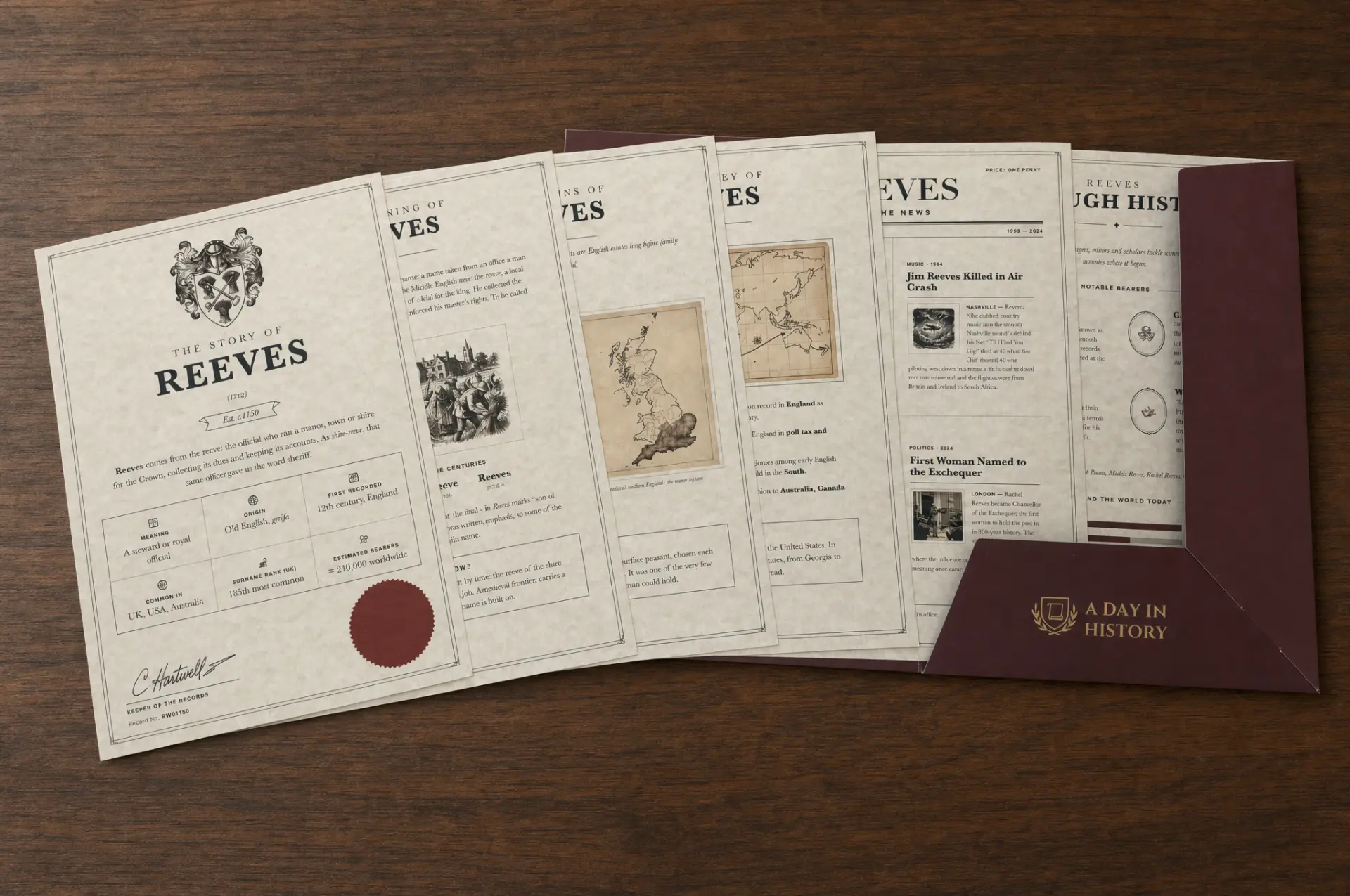
| Comparison | A quick online search | Surname History Pack |
|---|---|---|
| Meaning & origins | Short summaries to sift through | Your surname’s story, meaning and origins brought together |
| The bigger picture | Pieced together from different websites | Spellings, maps, a timeline, news and notable namesakes |
| Format | Text on a screen | Six personalized parchment pages |
| Something to keep | Bookmarks and printouts | A premium gift folder to keep and revisit |
“It was really interesting finding out our surname was first heard of in 1189 and that it also means a nimble and active person!!”
What your ancestors were known for, hundreds of years ago
Before 1066, most people in England only had a first name. Then the Normans arrived with a handful of favorites, and within a few generations every village was full of Johns and Williams. You needed a way to tell one John from the next, so people added a second name.
Most surnames come from a job (Smith, Fletcher), a place (Hill, Atwood), a father (Johnson, O'Brien) or a nickname (Brown, Armstrong).
By about 1400, those names were passing from parent to child, and your family has carried yours ever since. Your Surname History Pack tells you what it first meant, and which of the four it came from.
“I love seeing where my family name came from. I had my suspicions, and they were right! Thanks so much!”
Where your surname came from
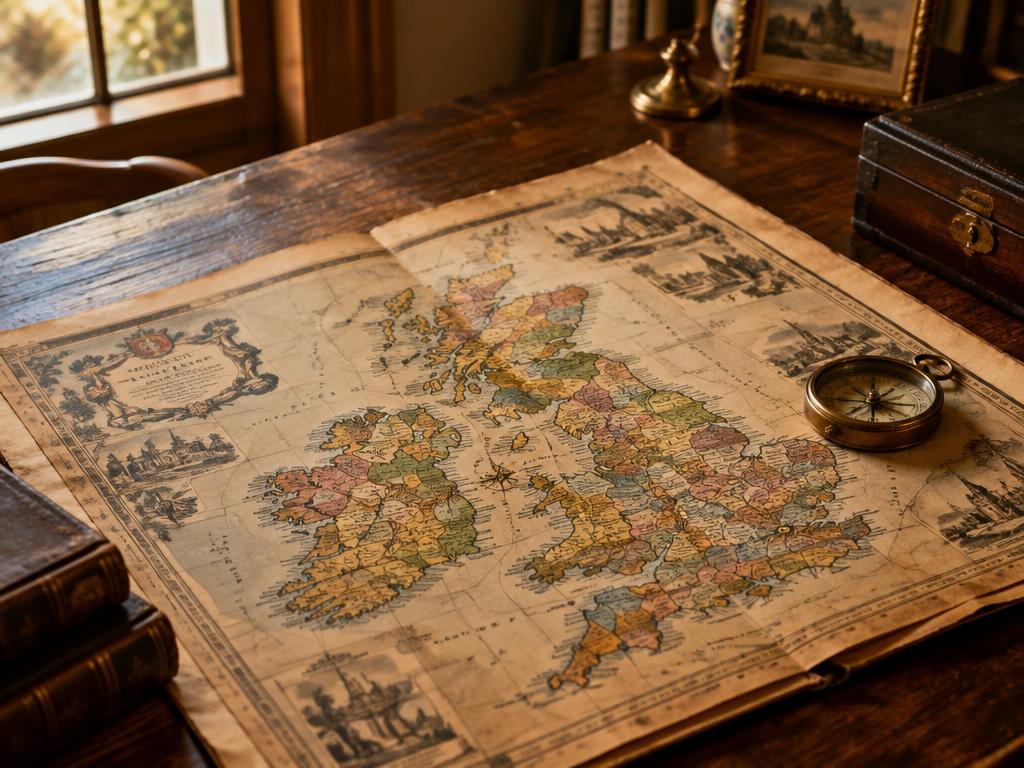
Most surnames started in one particular place. In 1890 a researcher called Henry Guppy mapped British surnames county by county and found many of them still clustered where they began, hundreds of years later.
Plenty of names started further away. The Normans brought names over from France, Flemish weavers settled in East Anglia, and Huguenot families fled France for London in the 1600s. A name that sounds as English as they come can have started across the Channel.
Your pack includes a map of where your name began, so you can see where your family came from long before America.
Why your name wasn’t always spelled this way
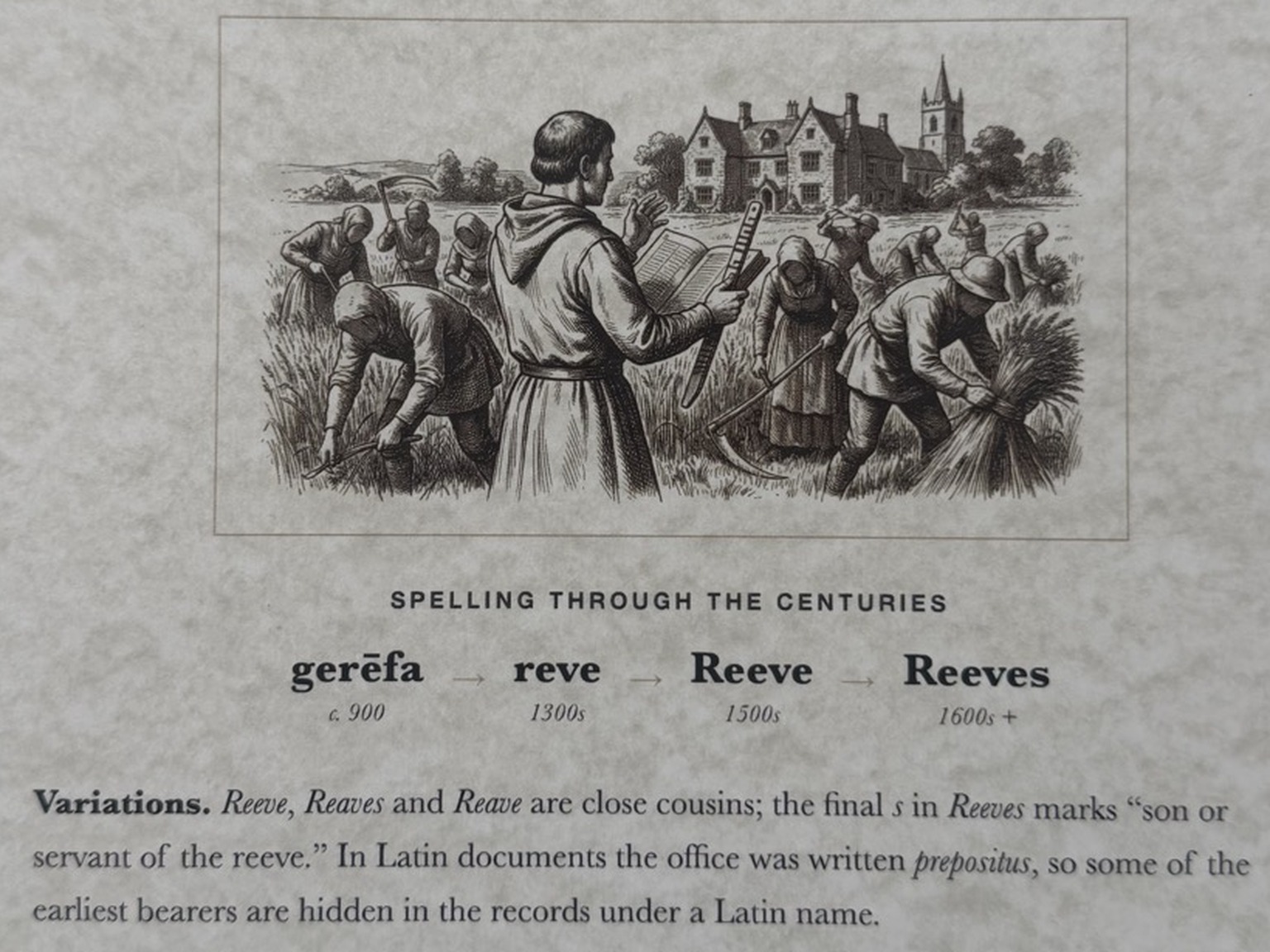
For most of history there was no right way to spell a name. A priest or a clerk wrote down what he heard, and the next might write it differently. Even Shakespeare’s signatures don’t agree.
Spellings only really settled once births, marriages and deaths had to be registered, from 1837 in England and Wales.
So the Smyths and Smiths may share a root. Your pack shows your name’s original spelling and how it changed over the centuries.
Limited printing slots each week.
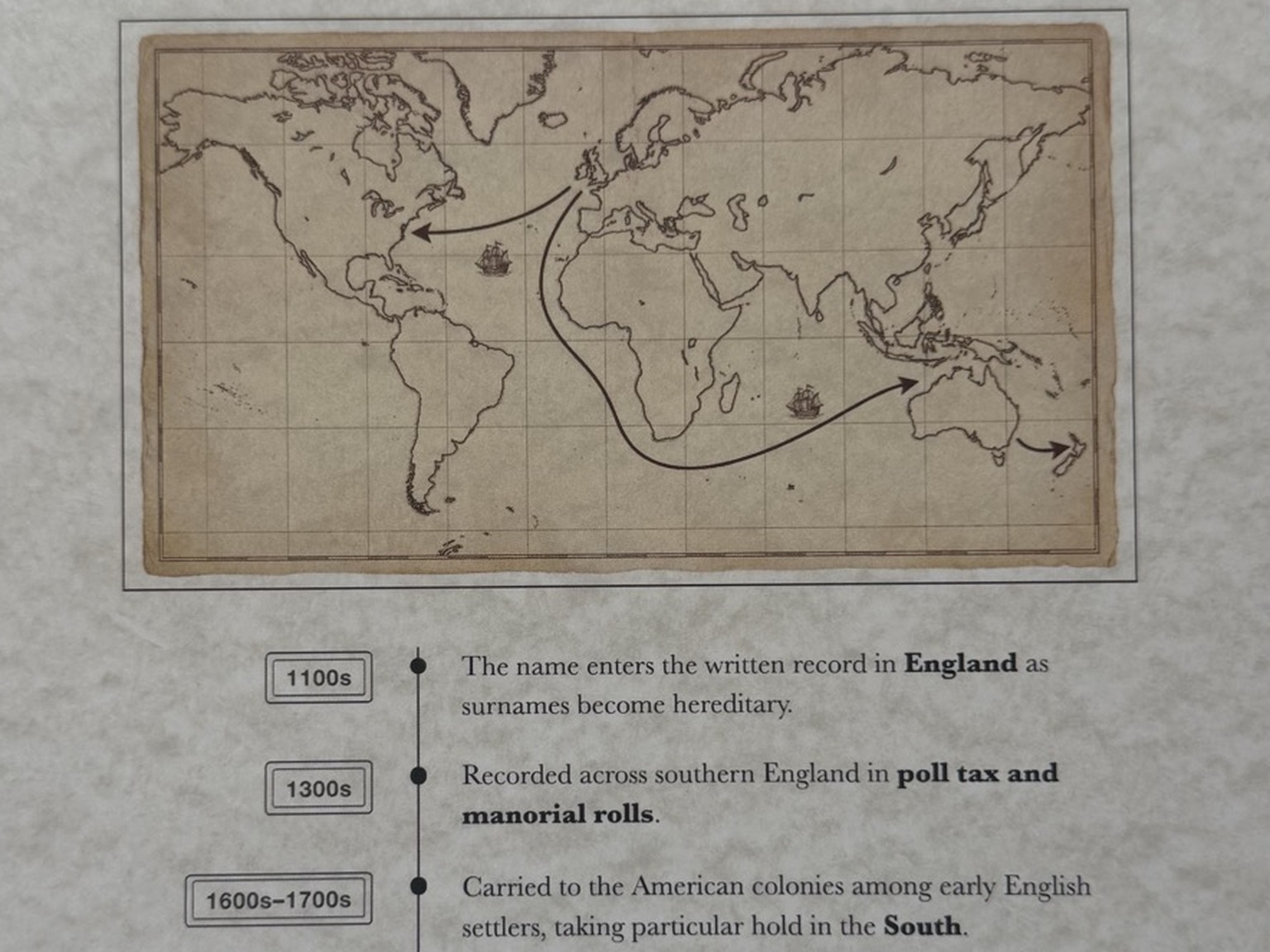
How far your family’s name has traveled
Once a name was fixed, people started taking it places. Younger sons moved to the cities for work, and in the 1800s whole families sailed for America, many never to see home again.
Every one of them took the name with them, which is how your surname crossed the Atlantic, and why it turns up in places your family has never been.
Your pack traces your name’s journey on a migration map and timeline, and shows where it’s found today.
Limited printing slots each week.
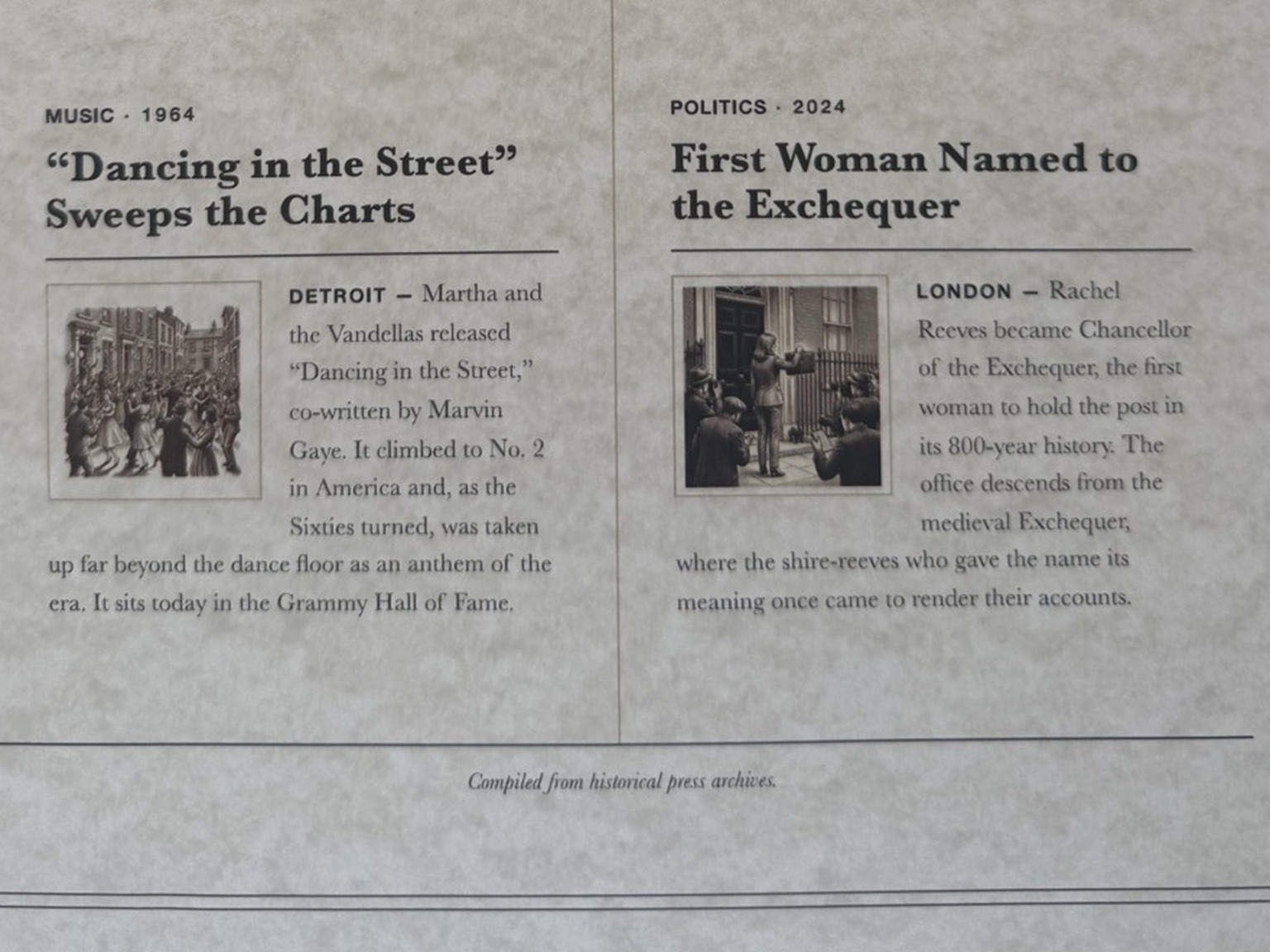
The unexpected stories of people who share your name
People who share your surname have been soldiers, writers and inventors, and some of their stories made it into the history books.
Your surname has also appeared in newspapers, parish records and history books, often in ways you’d never expect.
Your pack includes a newspaper page of your name in the news, and the famous figures who’ve shared it.